

Residents are advised to avoid contact and ingestion of water in the upper reservoir of Hopkinton State Park following a warning issued by the Department of Conservation and Recreation this week.
Officials from the Department of Public Heath notified the Hopkinton Health Department on Monday morning that cyanobacterial harmful algal blooms (CyanoHABs) were detected in the reservoir. Upon DPH’s recommendation, DCR issued an advisory to avoid contact with the water. DCR will post signage at access points near the reservoir to alert residents.
Cyanobacteria are naturally occurring in all bodies of water, and some have the capacity to produce cyanotoxins, per information on the Massachusetts Department of Environmental Protection’s website. Also referred to as blue-green algae, the microorganisms can cause health concerns such as gastrointestinal symptoms, neurological or liver damage, skin or eye irritation, asthma-like symptoms and more.
“Small children and pets are more susceptible to the effects of cyanotoxins than adults,” the MassDEP website states.
“DPH will be coordinating with DCR to monitor and evaluate the bloom conditions, including laboratory testing once the bloom starts to dissipate,” Rachel Gladstone, an environmental analyst from the DPH, stated in an email to the Health Department.
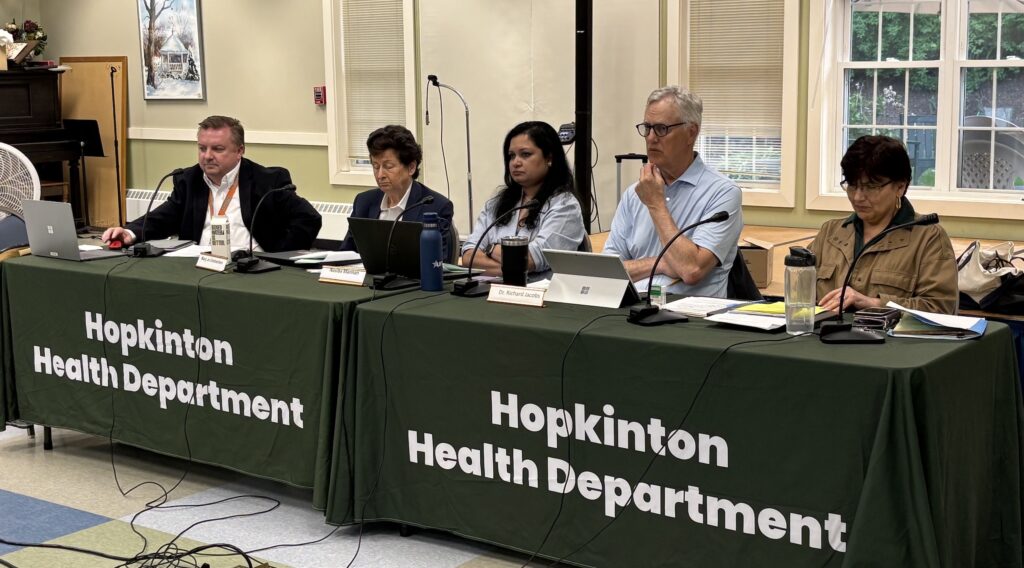
Health director Shaun McAuliffe, in an email to the Independent, advised that residents and their pets should avoid coming into contact with or ingesting the water in the reservoir until the DPH advisory is rescinded.















0 Comments