

Maintaining that the space is available for public use, the Parks & Recreation Commission on Tuesday decided not to change its approach for permitting events at Town Common.
The discussion over how the Town Common is used and permitted was brought up after the Hopkinton Farmers Market asked both the Select Board and the commission for assistance with protesters. In a letter dated Sept. 10, market manager Julie Beauchemin requested each group consider a “reasonable, constitutionally permissible framework” for handling protests at the common while other events are taking place.
“One of the options that was laid out was: Would we be open to granting exclusive use permits over the common?” chair Kyle Smith explained.
“It would effectively make a public space a private space for the period, but it moves into some pretty dicey water,” Smith added.
Any events that require permits at Town Common fall under the purview of Parks & Rec. In a previous interview, Town Manager Elaine Lazarus explained that the Hopkinton Farmers Market’s permit only allows it use of part of the common. The only event that is granted full use is the Boston Marathon — a fact per diem Parks & Rec director Jon Lewitus confirmed during the meeting.
“Even [for] PolyArts … the stance is that it’s open to the public,” said Lewitus.
The push to manage protests at Town Common follows instances of allegedly disruptive behavior by protesters reported both by the Farmers Market and Hopkinton Police. The first appearance of a protester at the market on Aug. 30 resulted in a clash between a demonstrator and a vendor. The vendor threw the man’s phone after it was held in front of his face, and the protester claimed he was assaulted, according to the police report.
The responding officer did not file charges, stating he did not believe there was enough evidence to charge the vendor at that time. Beauchemin’s letter, which was signed by nearly 30 vendors, indicated the demonstrators returned during another market day and verbally harassed and intimidated vendors and shoppers.
“It’s really a question of whether or not we want to consider changing the way that groups use the common,” said Smith.
Lewitus called the matter a “tricky subject” and noted that infringement on people’s First Amendment rights “brings out the worst in people.” He advocated for maintaining Parks & Rec’s permitting process.
Vice chair Dan Terry shared his opinion that if groups insisted on having private permitting rights to the common, it was “probably the wrong place” for them.
“They have to acknowledge that it’s still a public space,” said Terry. “We need to be more specific in what someone’s rights are so they know [and] so there isn’t a confrontation.”
Member Amy O’Donnell suggested there might be some value in asking groups that want to organize protests at the common to apply for permits. “We could ask, but it doesn’t change the fact they don’t have to,” she admitted.
Terry added that even if Parks & Rec adopted a policy granting private use of the common, enforcement was not guaranteed. “We can put all the policies in place we want,” he said. “If the people that need to enforce that aren’t going to enforce it, then what good does it do?”
Members agreed that there was value in providing education on the permits about partial use and the rights of others to use Town Common.
CPC priorities identified
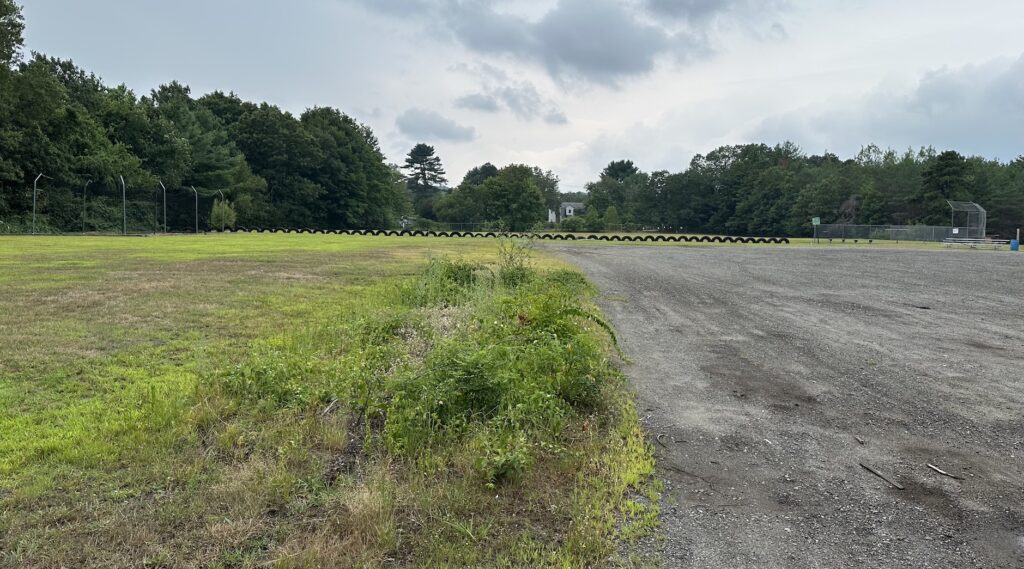
The commission agreed it would submit three requests for Community Preservation funding by the October deadline: Fruit Street pickleball lighting, lights for Carrigan Park and continuing the Pyne Field project.
Lewitus presented updates on all three items. He noted an upcoming meeting with cricket users to get input on pitch designs and that he already had met with town baseball representatives. He added that the field’s design was approaching completion and would be ready to move forward in the near future.
“I’m hoping to have that 90% design done,” said Lewitus. He expressed a desire for the commission to review the plan and give it final approval before taking it to the Planning Board.
Lewitus also informed the commission that he had discussed the Carrigan Park lights project with Hopkinton Little League, which agreed to sign on as a co-sponsor for the application to the Community Preservation Committee.
The final CPC application — lights at the Fruit Street pickleball courts — will be a repeat submission. The project was submitted as part of Article 20 at Annual Town Meeting in May, but it was pulled out and considered separately before being defeated 85-81.
“What is the feeling on submitting the same thing back to back years?” asked Smith.
Terry responded that it should not be an issue to submit to the CPC again as long as the previous application is updated and funding totals are adjusted to account for price changes.
Members agreed that if the CPC approves the project again, the commission should advocate for it at the next ATM and make sure interested parties show up to vote in favor. The commission will review its CPC applications at a future meeting.















0 Comments