

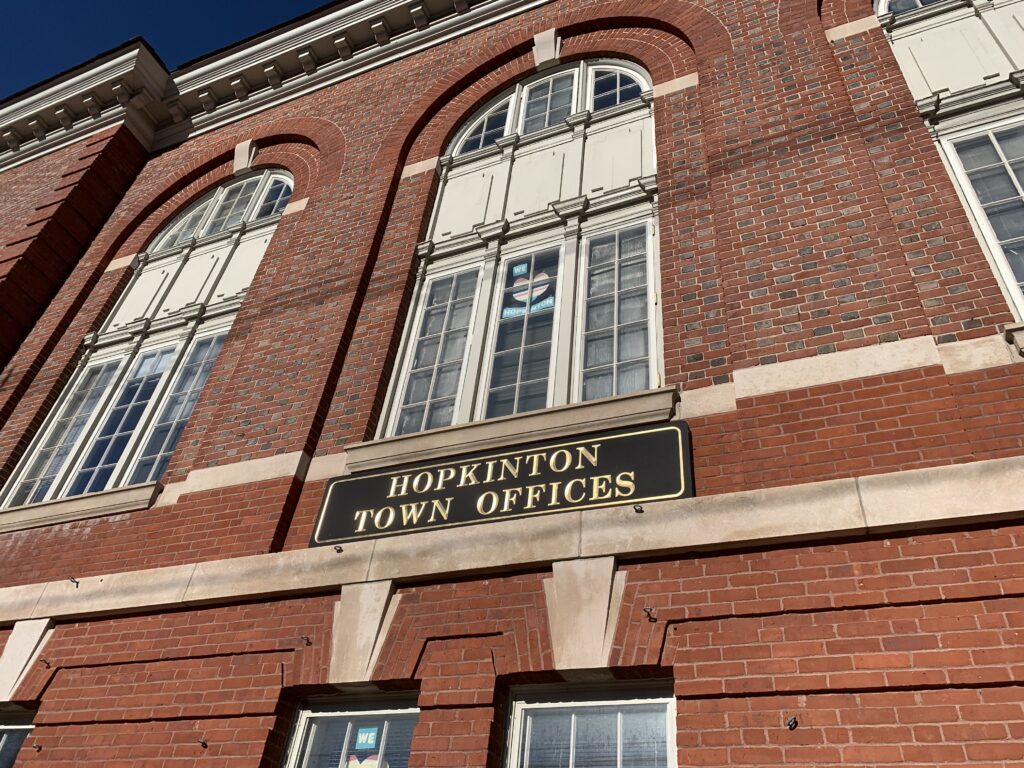
The Community Preservation Committee on Thursday received updates on the Center School reuse project and the refurbishment of Pyne Field.
Permanent Building Committee chair Dan McIntyre thanked the committee for its previous allocation. The money is being used for the Center School demolition work to the two rear additions. Hazardous material removal from the interior began earlier this month. “The building will start to come down” in about five weeks, according to McIntyre. Work should be completed by mid-January.
He explained that the demolition bids came in “almost 30% below what we estimated.” But insurance, architectural and owner’s project manager expenses were slightly higher than anticipated.
“I think we’ll come in well under budget on the demo,” said McIntyre. “So that’s good news.”
Project scaled back due to cost
The next phase now is estimated to cost about $14.5 million. It will include site work, interior renovation to the 1928 building, the new addition in the rear and parking lot installation.
At one point, the cost was projected to be about $16.6 million. The lobby was scaled back, and some less costly materials will be used for interior finishes, McIntyre said.
An updated cost estimate should be available in February, he added.
McIntyre noted that the 1928 building’s slate roof needs to be replaced rather than repaired. This is expected to cost $1.1 million. The 22-year-old roof’s shingles were found to have iron deposits, which expand, rust and crack the shingles.
Vice chair Eric Sonnett asked if a composite material that resembled slate could be used. He noted that the Historical Commission approved this usage for the roof on the Town Common gazebo.
Chair Ken Weismantel said McIntyre will need to appear before the Historic District Commission with a request to change the material.
Contingency plans could lead to tax increase
McIntyre explained that the project originally was planned as a partnership between the town and the Hopkinton Center for the Arts. Because the HCA’s $4 million contribution is expected to come from grants and donations, he said the project completion date is uncertain. He presented two contingency plans.
The first plan would not include the HCA as a tenant. Instead, another town department could use the floor planned for it. The Parks & Recreation and Youth & Family Services departments are slated to be housed there. He said he did not want this to happen.
“[This] means we’d have to go to Town Meeting and request a tax increase and borrowing,” said McIntyre.
The ask could be as high as $14.8 million, he said. The town would take out a municipal loan with a 20-year repayment plan.
“We’d rather not go down that road,” McIntyre added, “since we’ve been selling this project as being able to be done without tax increases.”
McIntyre said he intends to go before the May ATM to ask for “the full amount so we’re prepared.”
There would be a condition that the start of the interior renovation phase would be contingent upon the HCA’s $4 million contribution. Also, exterior repairs and the bid document preparation could move forward without receipt of the HCA’s portion; the amount of that work cannot exceed $3 million.
Weismantel called these “worst case numbers.” The new estimate coming in February could be lower than anticipated.
He added that additional CPC funds could help cover the cost.
The second option would be a phased approach. Exterior work would be performed on the 1928 building to weatherize it. Interior renovations would follow.
Grill: HCA’s funding prospects look promising
Kelly Grill, the HCA’s executive director, explained that she already has received $750,000 in individual and corporate pledges. She plans to start a public fundraising campaign in March.
Upcoming meetings with major corporate donors could bring in donations of as much as $10 million, according to Grill.
Grill has been waiting to receive a response regarding a federal grant for which she applied. Usually results are announced in June. The uncertain political climate this year pushed the decision until after the midterm elections.
“We made it to Round 2,” she said. “So it’s sitting now in the Senate Appropriations Committee.”
Grill has been working with the offices of Ed Markey and Elizabeth Warren, the state’s U.S. senators, on the grant “that is specifically for underutilized municipal buildings.” She said they called the application “very strong.”
She expects to hear about the grant by the end of December. If the HCA does not receive it, Grill said she will reapply in January. The request may have more traction now that work is being done.
If the current request is approved, Grill explained, the money would be available this fiscal year in June. The request was for $5.6 million. A reapplication would mean that funding would not be granted until June 2028, but the amount of the request would go up. The money would go directly to the town because it is a joint HCA-town application, she noted.
In addition, Grill said she is applying for state grants and municipal grants for ADA improvements, as well as funding from foundations.
Pyne Field project to focus on rehabilitation
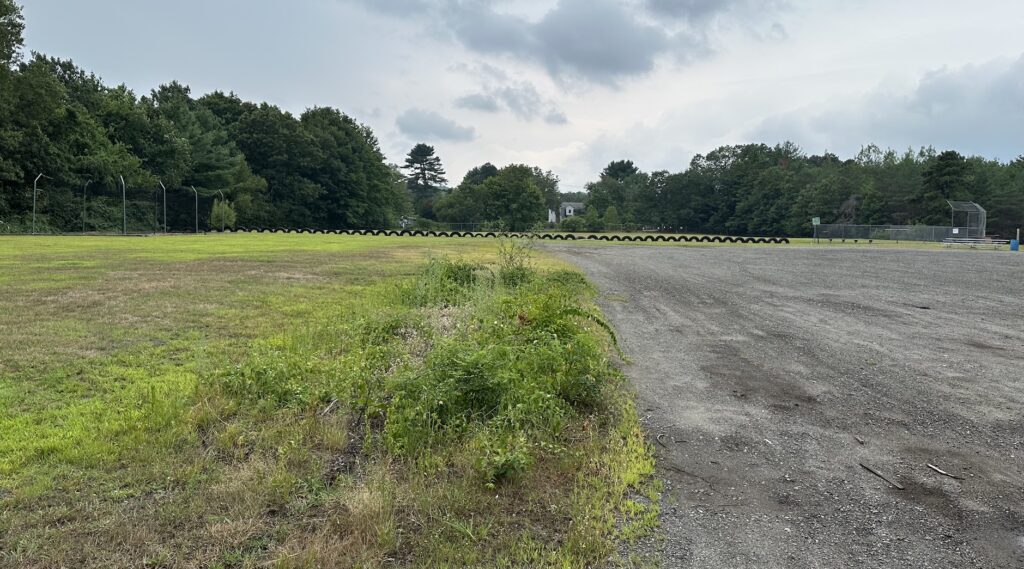
Dan Terry, the Parks & Recreation Commission liaison, explained that the original plan for a cricket pitch and a Little League baseball field has been revised. The request now is to use money from the $1 million allocated in 2022 to perform repair work on the current baseball field. It primarily would be used as a softball field.
Weismantel confirmed that there is around $840,000 left from this grant. He suggested using $700,000 toward the upgrade. The current cost estimate is $1.125 million,
Terry noted that the project was detailed and voted on at Tuesday’s Parks & Rec meeting.
He asked that the previous request for $3 million for the cricket pitch and ball field be rescinded. Issues arose with the cost, field configurations and parking lots over several iterations.
One issue Terry explained was the town’s bylaw requiring parking lots to be EV-ready. The work would cost $125,000.
Because the original project received ATM funding for a cricket pitch as well as the ball field, the modification request would need to be voted on at May’s ATM.
Weismantel said the EV-ready requirement in this case was “absolutely ridiculous.” He noted that parents can charge their cars at home.
If this cost is included, Weismantel said he and Parks & Rec chair Kyle Smith discussed drafting a citizens’ petition for the May ATM that would exclude public fields from the EV-ready parking lot requirement.
He added that he had expected to see people from the cricket community advocating for the cricket pitch.
Said Weismantel: “It’s been kind of crickets.”
The CPC will vote on the fiscal year 2028 funding requests at its next meeting on Nov. 17.













0 Comments